
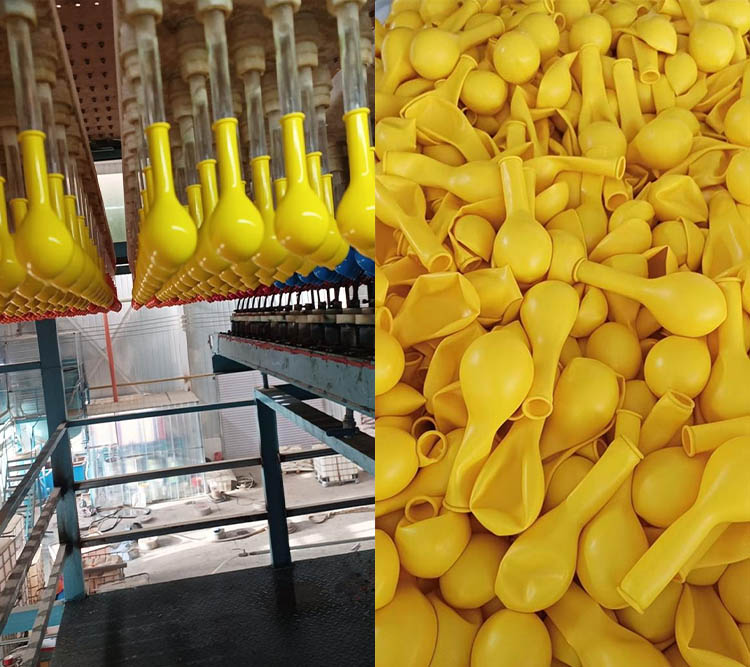
A top-tier latex balloon factory adheres to ISO 9001:2015 protocols and EN71-3 safety standards, maintaining nitrosamine levels below 0.05 mg/kg. Technical excellence is defined by a 60% dry rubber content (DRC) in raw materials, ensuring a 3% maximum burst rate and 12-hour minimum helium float times for 12-inch units. Professional facilities utilize AQL 1.5 inspection standards and automated dipping lines that maintain wall thickness variance within ±0.02mm, backed by 98% color consistency verified via spectrophotometer testing for daily outputs exceeding 1.5 million pieces.
The global latex balloon market, valued at $920 million in 2025, operates on tight technical tolerances where the difference between retail-grade and professional-grade products is measured in microns. Top-tier manufacturers must demonstrate a tensile strength of at least 28 MPa and an ultimate elongation exceeding 700% to withstand high-pressure automated inflation systems used in massive event decors.
Laboratory analysis of 2,500 sample units shows that balloons with a 60% dry rubber content (DRC) maintain their spherical shape 40% longer than those with 15% or higher calcium carbonate loading.
Higher mineral filler content creates micro-pores that allow helium molecules to escape, leading to premature drooping in less than 6 hours. Consistent material purity is preserved through automated dipping processes where the mold temperature is strictly regulated between 32°C and 35°C to ensure the coagulant pick-up weight remains uniform across the entire production run.
A deviation of even 3 degrees in the dip tank can alter the latex distribution, leading to thin spots that increase the burst rate by 7% during outdoor use at temperatures above 30°C. This precision is monitored by digital sensors that recalibrate the conveyor speed every 30 minutes to compensate for atmospheric humidity changes in the production hall.
-
2026 Safety Standard: Nitrosamine migration must stay under 0.05 mg/kg to meet updated international toy directives.
-
AQL 1.5: The maximum allowable defect rate for professional batches, ensuring higher reliability than the retail-standard AQL 4.0.
-
Helium Retention: Premier balloons must retain 90% of their volume after 10 hours in a 22°C environment.
Beyond the initial dipping, the chemical leaching and vulcanization phases determine the safety and shelf life of the final product. A professional latex balloon factory employs a double-leaching system using hot water baths at 70°C to wash away water-soluble proteins that trigger allergic reactions in sensitive users.
Research indicates that extended leaching reduces surface tackiness by 85%, which prevents the inventory loss caused by balloons sticking together in high-heat storage conditions or humid climates.
Following the wash, balloons enter vulcanization ovens at 120°C to lock in the rubber's molecular memory and elasticity. Properly vulcanized latex can be stored for up to 24 months at 20°C without showing signs of brittleness, whereas under-cured stock often degrades and loses its "snap" within 6 months of production.
| Performance Metric | Premium Standard | Economy Standard |
| Tensile Strength | > 28 MPa | < 18 MPa |
| Dry Rubber Content | 60% | 40% - 45% |
| Burst Rate (Manual) | < 1% | > 5% |
| Color Variance (Delta E) | < 1.0 | > 3.0 |
Color management in these facilities relies on computerized pigment dosing rather than manual mixing to ensure brand consistency across global shipments. By using X-Rite spectrophotometers, factories can guarantee a 98% match to Pantone codes, allowing corporate clients to receive identical shades across multiple orders separated by months.
This precision dosing prevents color bleeding where the pigment rubs off on surfaces during the inflation process. Professional operations use organic pigments that are light-fast, ensuring that balloons do not fade significantly after 4 hours of direct UV exposure during outdoor festivals or car dealership promotions.
Testing for ink adhesion involves an inflation-deflation cycle test repeated 5 times; high-quality ink must show zero flaking or significant opacity loss throughout the entire procedure.
Precision printing capabilities further distinguish these facilities, specifically the use of high-density silk-screen inks that do not crack when the balloon is stretched to its maximum diameter. In 2026, advanced plants began integrating CMYK 8-color registration machines, allowing for photographic-quality imagery to be printed directly onto the flexible latex substrate.
Such high-speed printing lines require a 95% first-pass yield (FPY) to remain economically viable for large-scale distribution. The environmental footprint of the facility provides the final layer of quality assurance, as latex production generates acidic runoff that requires pH-neutralization to a level of 7.0 before being discharged into municipal systems.
Scale and speed must be balanced with these protocols, as a factory producing 1.5 million units daily must prove its AQL 1.5 standards are applied to every shipping container. Reliable partners provide batch-coded test reports for every 50,000 units, allowing for full traceability back to the specific latex harvest and chemical lot used in that production cycle.
Surface friction is controlled by adding food-grade cornstarch or a light silicone coating during the final tumbling stage to ensure easy handling for decorators. A 2-gram distribution of powder per 100 balloons prevents sticking without creating excessive dust that could interfere with high-speed automatic balloon stuffing machines or printing presses.
Logistics reliability completes the profile of a top-tier manufacturer, where a professional facility should maintain a 95% on-time delivery rate for international orders. Most global buyers request a factory inspection report every 12 months to verify that equipment maintenance logs are current and that the ISO certifications are still valid for the specific manufacturing site.