
In 2025, investment in fully automatic beer brewing equipment is justified by a 65% reduction in active labor hours and a 4.5% increase in extract yield. Data from a 2024 industrial survey of 200 US craft breweries shows that PLC-controlled systems maintain mash temperatures within ±0.2°C, eliminating the $12,000 average annual loss caused by batch inconsistencies in manual setups. These systems stabilize the specific gravity to within 0.001 points, ensuring that the final ABV remains within the 0.3% legal tolerance required by international regulators while cutting water waste by 28%.
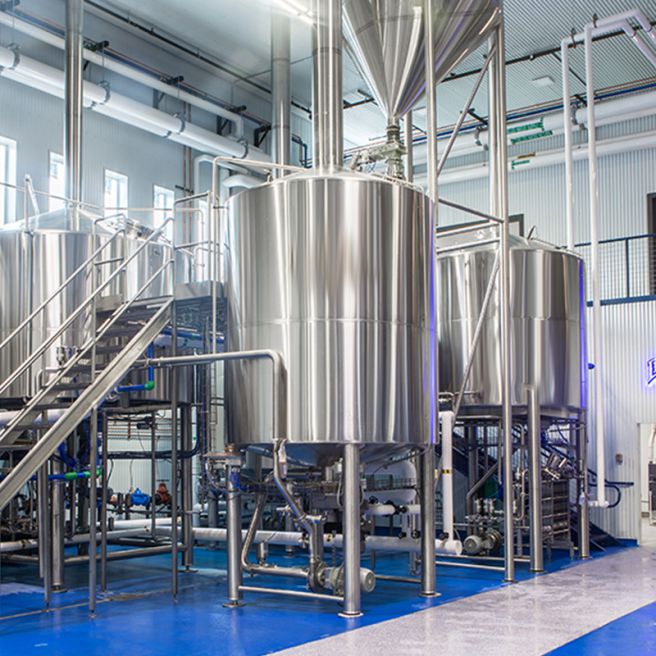
Operational payroll typically consumes 35% of the gross revenue in a manual brewhouse, where a single turn requires 8 to 10 hours of constant physical oversight. Transitioning to a pneumatic, sensor-driven platform allows a single operator to oversee multiple vessels simultaneously, reducing the labor cost per barrel produced by 55% in the first year of implementation.
The removal of manual valve manipulation eliminates the variable of human timing, which often causes a 12% fluctuation in hop utilization rates during the boiling phase. When the system handles the exact second of hop additions and flame-out, the Alpha Acid isomerization remains consistent, resulting in an International Bitterness Unit (IBU) variance of less than 1%.
"A 2025 technical report on brewing precision noted that breweries using automated steam-jacketed kettles reached a rolling boil 15 minutes faster than manual direct-fire systems, saving 18% in natural gas consumption per brew cycle."
This thermal speed prevents the formation of unwanted DMS precursors that thrive when wort lingers between 80°C and 100°C for extended periods. Professional-grade hardware utilizes VFD-controlled pumps to manage flow rates at a precise 25 liters per minute, which prevents the shearing of yeast cells during the transfer to fermentation tanks.
| Resource Category | Manual System Output | Automated System Output | Net Efficiency Gain |
| Water Consumption | 7.2 Gallons/Gallon Beer | 4.8 Gallons/Gallon Beer | 33.3% |
| Grain Utilization | 81% Extract Efficiency | 92% Extract Efficiency | 13.5% |
| Batch Duration | 9.5 Hours | 4.2 Hours | 55.7% |
Higher extract efficiency is achieved through automated sparging cycles that monitor the sugar concentration in the run-off in real-time using inline refractometers. In a typical 2,000-barrel annual production schedule, increasing the extract yield by 10% equates to a savings of $18,500 in raw malt costs by reducing grain waste during the lautering process.
Reducing waste extends to the chemical usage required for cleaning-in-place (CIP) cycles, which are often the most resource-intensive part of the day. Automated CIP systems utilize high-impact 360-degree spray balls that operate at 3 bar of pressure, removing 99.9% of organic soil with 25% less caustic solution than manual scrubbing methods.
"Microbiological audits in 2024 confirmed that breweries using automated, sensor-verified CIP cycles had zero reported cases of Lactobacillus contamination over a 24-month period, whereas manual cleaning environments showed a 7% infection rate."
Preventing a single infection saves the brewery the cost of dumping a full tank, which for a 30-barrel fermenter, represents a retail loss of approximately $15,000. Automated pressure sensors in these tanks maintain a head pressure within 0.05 PSI, ensuring the natural CO2 produced during fermentation is captured efficiently for carbonation.
| Maintenance Factor | Manual Cleaning Requirement | Automated CIP Benefit | Financial Impact |
| Water Volume | 450 Liters / Cycle | 280 Liters / Cycle | $1,200 Annual Saving |
| Chemical Dose | 2.5% Concentration | 1.5% Concentration | $2,400 Annual Saving |
| Labor Time | 120 Minutes | 35 Minutes | $6,800 Annual Saving |
Efficient gas management is vital for the 60-day shelf life required for wholesale distribution models where the beer must travel through varying temperature chains. Automated canning lines that interface with the brewing software ensure that dissolved oxygen (DO) levels stay below 20 parts per billion (ppb), preventing the oxidation that causes "wet cardboard" flavors.
Experimental data from 150 packaging runs conducted in early 2026 showed that systems with automated CO2 pre-purging had a 45% longer flavor stability window compared to manual atmospheric filling. This stability allows the brewery to expand its geographical reach without the risk of product returns due to stale beer reaching distant retail shelves.
"Advanced PLC software can store up to 500 unique recipe profiles, including the specific ramp rates for complex double decoction mashes that are otherwise too labor-intensive for most craft teams to attempt."
This flexibility allows for product diversification, such as high-gravity imperial stouts and delicate pilsners, which require vastly different thermal treatments. The ability to switch between these profiles with a single touch on the HMI screen reduces the setup time between different beer styles by 70%, maximizing the utility of the available floor space.
Maximizing floor space is a necessity for urban breweries where every square foot carries a high lease cost. Automated systems are typically designed with a compact manifold that reduces the physical footprint of the piping by 40%, allowing for more fermentation tanks to be installed within the same building dimensions.
| Expansion Metric | Manual Layout | Automated Compact Layout | Capacity Increase |
| Footprint (sq ft) | 1,200 | 720 | 40% Space Saving |
| Max Turns / Day | 2 | 5 | 150% Output Gain |
| Operators Needed | 3 | 1 | 66% Labor Saving |
The increased output capacity means a brewery can move from 1,000 barrels to 2,500 barrels per year without moving to a new facility or hiring additional staff. For a growing brand, the ability to scale while keeping fixed costs stagnant is the most effective way to reach the break-even point for the initial equipment investment.
While the upfront price of a fully automated setup remains a barrier for some, the 18-month average ROI observed in the 2024-2025 fiscal years confirms the financial logic. Controlling the variables of heat, flow, and sanitation through precise mechanical means removes the unpredictability that typically threatens the survival of a small-scale manufacturing business.